THE WAY
There is a widespread belief that architecture is linked to sedentary life, to the literal occupation of the land, thus turning nomads and wanderers into a kind of anarchist. As Francesco Careri rightly points out, this is not entirely true. Architecture is not only linked to the space of dwelling, but also to the space of movement.
Sedentary space is striated by walls, enclosures, and paths between these enclosures, while nomadic space is smooth, marked only by a few lines that fade and shift with the journey.
Therefore, architecture exists in nomadic space insofar as there is a conception of space; the architecture of the journey. This nomadic space, the space of walking, is formed in the void between the point of departure and the point of arrival. A symbolic place in which the life of the community unfolds.
The nomadic map is a void in which routes connect wells, oases, sacred places, grazing lands, and spaces that transform at great speed. It is a map that seems to reflect a fluid space where fragments of the space of being float in the emptiness of walking, and where ever-changing routes are marked until the wind erases them.
Therefore, this project aims to understand the Camino de Santiago as a nomadic space. A space generated and transformed over the years in which the different spaces of being can float.

Mapa de Bedolina. Poblado entendido desde el recorrido y los límites: el espacio nómada y los espacios del estar.
THE WANDERER
The evolution of the Camino de Santiago is obviously linked to the pilgrim. Over the centuries, the pilgrim has transformed, becoming the nomad of the 21st century. Their understanding of the journey has changed, and with it, their needs. Individuality has given way to relationships. The pilgrim no longer walks as penance; they have found in the journey a place to connect, both with people and with the environment. The Camino is no longer seen as a blank space to traverse, valuing only the act of walking; it is understood as a union between the person and the land.
It follows, therefore, that the traveler will need new places, or will use existing ones differently. The nomadic space is transformed, and with it, the spaces of dwelling. Their understanding of the journey has changed, and with it, their needs.
The project begins with an analysis of the current state of the nomadic space and its infrastructure. Territorial aspects such as topography, noise, and landscape are examined. This is complemented by a more infrastructural analysis, aiming to determine whether the spaces serving the Camino meet the needs of the nomads. It is observed that over the years, the infrastructure surrounding the Camino has evolved from a network of religious spaces to a much broader concept encompassing health centers, hostels, and so on. This new infrastructure has grown with two singular objectives: to address the direct needs of the pilgrim and to capitalize on the Camino. Therefore, spaces that enhance the nomadic space have not been created; instead, spaces have been built solely to make it profitable.
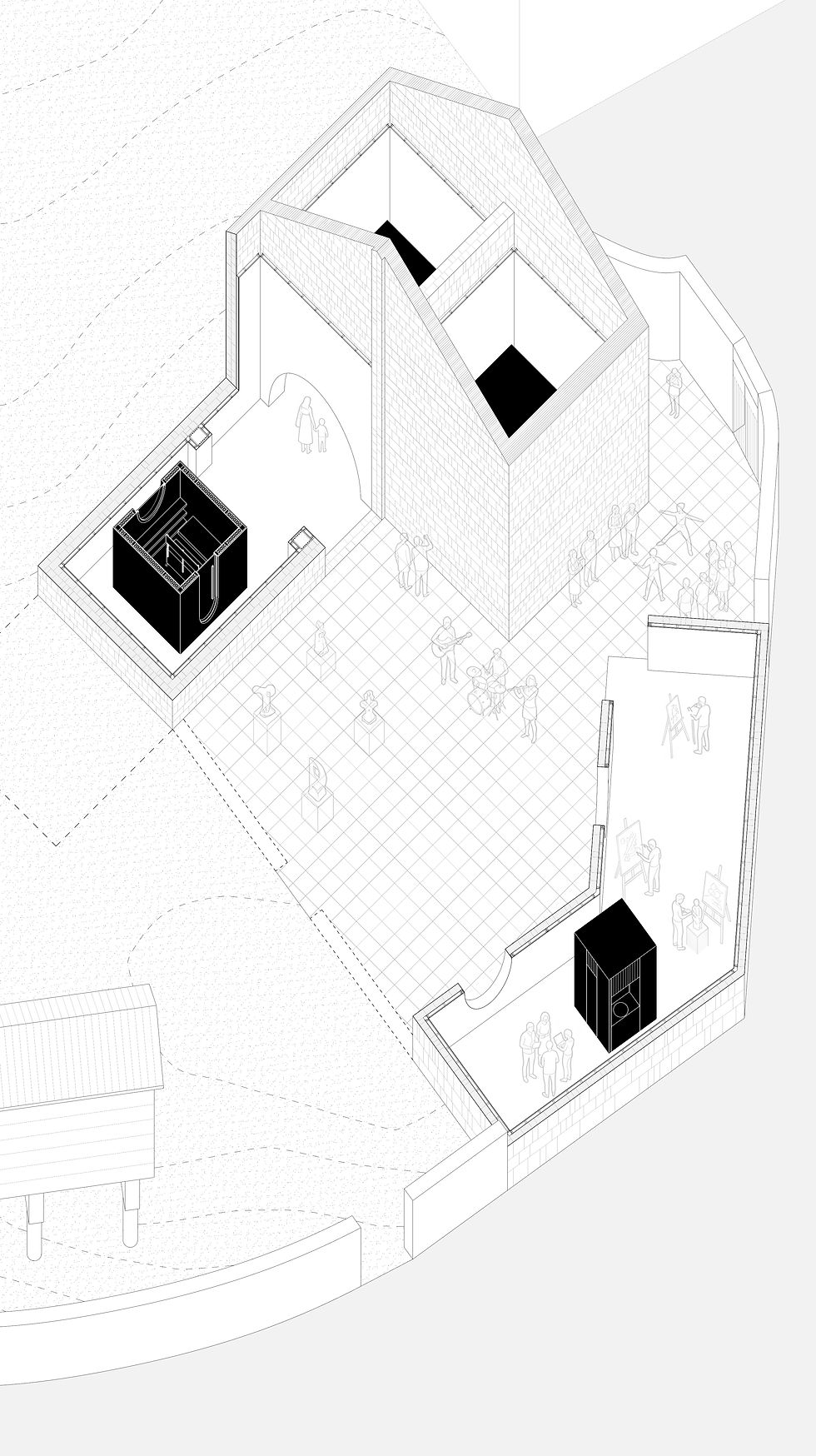
This study combines observations of how the nomadic traveler has evolved over centuries with a multi-criteria analysis of nomadic space. The result is a series of spaces distributed throughout the territory, designed to meet the needs of travelers. These spaces are proposed in different locations and at varying distances with the aim of creating an infrastructure that connects the territory. They are starting and ending points that reinforce the concept of nomadism. These are spaces for dwelling.

Aldea de Arcos. Caso de estudio de la infraestructura.
THE WANDERER

The evolution of the Camino de Santiago is obviously linked to the pilgrim. Over the centuries, the pilgrim has transformed, becoming the nomad of the 21st century. Their understanding of the journey has changed, and with it, their needs. Individuality has given way to relationships. The pilgrim no longer walks as penance; they have found in the journey a place to connect, both with people and with the environment. The Camino is no longer seen as a blank space to traverse, valuing only the act of walking; it is understood as a union between the person and the land.
It follows, therefore, that the traveler will need new places, or will use existing ones differently. The nomadic space is transformed, and with it, the spaces of dwelling. Their understanding of the journey has changed, and with it, their needs.
The project begins with an analysis of the current state of the nomadic space and its infrastructure. Territorial aspects such as topography, noise, and landscape are examined. This is complemented by a more infrastructural analysis, aiming to determine whether the spaces serving the Camino meet the needs of the nomads. It is observed that over the years, the infrastructure surrounding the Camino has evolved from a network of religious spaces to a much broader concept encompassing health centers, hostels, and so on. This new infrastructure has grown with two singular objectives: to address the direct needs of the pilgrim and to capitalize on the Camino. Therefore, spaces that enhance the nomadic space have not been created; instead, spaces have been built solely to make it profitable.
This study combines observations of how the nomadic traveler has evolved over centuries with a multi-criteria analysis of nomadic space. The result is a series of spaces distributed throughout the territory, designed to meet the needs of travelers. These spaces are proposed in different locations and at varying distances with the aim of creating an infrastructure that connects the territory. They are starting and ending points that reinforce the concept of nomadism. These are spaces for dwelling.
The evolution of the Camino de Santiago is obviously linked to the pilgrim. Over the centuries, the pilgrim has transformed, becoming the nomad of the 21st century. Their understanding of the journey has changed, and with it, their needs. Individuality has given way to relationships. The pilgrim no longer walks as penance; they have found in the journey a place to connect, both with people and with the environment. The Camino is no longer seen as a blank space to traverse, valuing only the act of walking; it is understood as a union between the person and the land.
It follows, therefore, that the traveler will need new places, or will use existing ones differently. The nomadic space is transformed, and with it, the spaces of dwelling. Their understanding of the journey has changed, and with it, their needs.
The project begins with an analysis of the current state of the nomadic space and its infrastructure. Territorial aspects such as topography, noise, and landscape are examined. This is complemented by a more infrastructural analysis, aiming to determine whether the spaces serving the Camino meet the needs of the nomads. It is observed that over the years, the infrastructure surrounding the Camino has evolved from a network of religious spaces to a much broader concept encompassing health centers, hostels, and so on. This new infrastructure has grown with two singular objectives: to address the direct needs of the pilgrim and to capitalize on the Camino. Therefore, spaces that enhance the nomadic space have not been created; instead, spaces have been built solely to make it profitable.
This study combines observations of how the nomadic traveler has evolved over centuries with a multi-criteria analysis of nomadic space. The result is a series of spaces distributed throughout the territory, designed to meet the needs of travelers. These spaces are proposed in different locations and at varying distances with the aim of creating an infrastructure that connects the territory. They are starting and ending points that reinforce the concept of nomadism. These are spaces for dwelling.

THE WAY
There is a widespread belief that architecture is linked to sedentary life, to the literal occupation of the land, thus turning nomads and wanderers into a kind of anarchist. As Francesco Careri rightly points out, this is not entirely true. Architecture is not only linked to the space of dwelling, but also to the space of movement.



THE WAY
There is a widespread belief that architecture is linked to sedentary life, to the literal occupation of the land, thus turning nomads and wanderers into a kind of anarchist. As Francesco Careri rightly points out, this is not entirely true. Architecture is not only linked to the space of dwelling, but also to the space of movement.


THE WAY
There is a widespread belief that architecture is linked to sedentary life, to the literal occupation of the land, thus turning nomads and wanderers into a kind of anarchist. As Francesco Careri rightly points out, this is not entirely true. Architecture is not only linked to the space of dwelling, but also to the space of movement.

There is a widespread belief that architecture is linked to sedentary life, to the literal occupation of the land, thus turning nomads and wanderers into a kind of anarchist. As Francesco Careri rightly points out, this is not entirely true. Architecture is not only linked to the space of dwelling, but also to the space of movement.

There is a widespread belief that architecture is linked to sedentary life, to the literal occupation of the land, thus turning nomads and wanderers into a kind of anarchist. As Francesco Careri rightly points out, this is not entirely true. Architecture is not only linked to the space of dwelling, but also to the space of movement.

There is a widespread belief that architecture is linked to sedentary life, to the literal occupation of the land, thus turning nomads and wanderers into a kind of anarchist. As Francesco Careri rightly points out, this is not entirely true. Architecture is not only linked to the space of dwelling, but also to the space of movement.

THE WAY
There is a widespread belief that architecture is linked to sedentary life, to the literal occupation of the land, thus turning nomads and wanderers into a kind of anarchist. As Francesco Careri rightly points out, this is not entirely true. Architecture is not only linked to the space of dwelling, but also to the space of movement.


